
Two wholesale providers can quote the same rate — say, six-tenths of a cent per minute — and send you invoices that differ by a factor of three for identical traffic. Nobody is lying; they're simply billing differently underneath the headline number. The gap comes from how calls are rounded, how settlement works, and what happens when your volume doesn't match the plan you signed. Understanding these mechanics is the difference between buying minutes and being surprised by them.
The Rounding Rule Hidden in the Footnotes
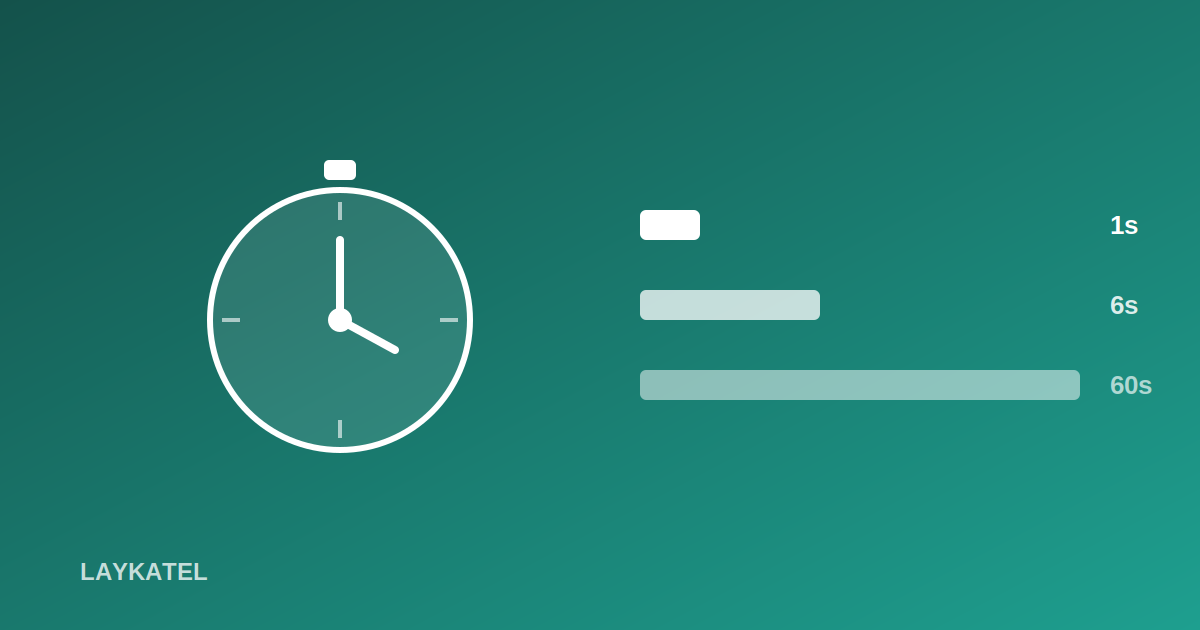
Every wholesale contract states a billing increment: the block of time a call is rounded up to before the per-minute rate applies. It's usually written as two numbers — the first increment and the increment after that — such as 1/1, 6/6 or 60/60. It's also usually buried, which is unfortunate, because it can matter more than the price.
- 1/1 bills exactly what you use, second by second. A 14-second call is billed as 14 seconds.
- 6/6 rounds each call up to the next six-second block. That same 14-second call becomes 18 seconds — a modest distortion per call that compounds across millions of them.
- 60/60 rounds every call up to a full minute. The 14-second call is now billed as 60 seconds, more than four times what was actually used.
The effect scales with how short your calls are. Long conversations barely notice rounding; short calls are punished hard by it.
A Worked Example With Realistic Numbers
Imagine an automated verification service placing 500,000 calls a month, averaging 14 seconds each, at a quoted rate of $0.008 per minute. Actual usage is 7,000,000 seconds, or about 116,667 minutes. Here's what the same traffic costs under each increment:
- 1/1 billing: 116,667 minutes × $0.008 ≈ $933
- 6/6 billing: each call rounds to 18 seconds, so 150,000 billable minutes × $0.008 = $1,200
- 60/60 billing: each call rounds to one minute, so 500,000 billable minutes × $0.008 = $4,000
Same rate, same traffic, and the most punishing increment costs more than four times the most precise one. A provider quoting $0.006 on 60/60 billing would still cost you $3,000 — more than three times the $933 you'd pay at a higher headline rate on 1/1. This is why we display the billing increment for every destination directly beside the price on our CLI and Non-CLI rate tables instead of leaving it for you to hunt down.
Prepaid and Postpaid: Two Ways to Settle the Same Bill
Prepaid means you fund a balance first and traffic draws it down in real time. When the balance reaches zero, calls stop unless auto-recharge kicks in. It caps your exposure, needs no credit relationship, and suits new accounts and volatile traffic — the trade-off is that you have to watch the balance, because running dry mid-campaign is an outage you caused yourself.
Postpaid extends a credit line and invoices you in arrears, typically monthly. It removes the operational chore of topping up and suits established accounts with predictable usage, but it leans on the provider's credit terms and on your own discipline in reconciling the invoice.
Neither model changes the underlying price per minute. What they change is cash flow and risk — who is financing whom, and for how long. Choose based on your working capital and traffic predictability, not on the assumption that one is cheaper.
Committed-Volume Plans: A Discount With Conditions
Higher-volume buyers are often offered a committed package: a fixed monthly allowance of minutes at a discounted blended rate in exchange for guaranteeing the volume. Providers like this because it lets them plan capacity. Buyers like it because the rate is lower — when the volume behaves. The conditions are where the fine print lives:
- Overage rate: what you pay for minutes beyond the allowance, frequently higher than the plan's blended rate.
- Unused minutes: whether they roll over or evaporate. Most plans forfeit them, which silently raises your effective rate in a slow month.
- True-up and step-down clauses: annual terms may penalize repeated overuse or underuse, so read them in both directions.
When the Commitment Stops Paying Off
Suppose a plan commits you to 1,500,000 minutes a month for $7,800 (a blended $0.0052 per minute), with overage at $0.0068. Pay-as-you-go pricing for the same provider is $0.0060 per minute. Break-even against pay-as-you-go comes at 1,300,000 minutes ($7,800 ÷ $0.006). Now watch how the months play out:
- 1,900,000 minutes: $7,800 plus 400,000 overage minutes × $0.0068 = $10,520, an effective $0.00554 — better than pay-as-you-go's $11,400. The commitment wins.
- 1,500,000 minutes: exactly $7,800 against $9,000 pay-as-you-go. Comfortable win.
- 1,100,000 minutes: you still pay $7,800, an effective $0.00709 per minute, while pay-as-you-go would have cost $6,600. The commitment loses.
The lesson is that a commitment is a bet on your own forecast. If monthly traffic swings by more than roughly a quarter either way, the overage and forfeiture terms can erase the discount that made the plan look attractive. Commit to the volume you're confident of and pay-as-you-go for the rest.
Calculate Your Real Cost Per Minute
The only figure worth comparing across providers is effective cost per minute: total dollars billed divided by total minutes of actual talk time. Here's the method:
- Export a month of your call detail records, preserving the real distribution of call lengths rather than an average.
- Re-bill that exact log under each candidate's increment, rate and plan structure, including overage.
- Divide each total by your actual talk-time minutes and compare the results.
Running this on two or three decks routinely reshuffles the ranking. The provider with the lowest headline rate frequently lands second or third once real call lengths are applied, and it takes an afternoon with a spreadsheet to find out.
Other Places Cost Hides
- Minimum call duration: some contracts bill a minimum per call regardless of length.
- False answer supervision: billing for calls that technically connected without a real answer, common on low-quality routes.
- Surcharges: premium, satellite, and hard-to-reach destinations sometimes carry extra charges outside the base deck.
- Rate change notice: how much warning a provider must give before changing prices — and whether your plan is locked during that window.
Our rates are recalculated daily rather than left to age in a spreadsheet, which is part of why we show the billing terms alongside each price — see the A-Z termination overview for how the tiers fit together.
Frequently Asked Questions
What is a billing increment? It's the block of time a call is rounded up to before the per-minute rate is applied — commonly one second, six seconds, or a full minute. It decides how much of a short call is billed as usage you never generated.
Is 6/6 billing better than 60/60? Yes for anyone with short or variable call lengths. Six-second rounding distorts far less than full-minute rounding and usually produces a noticeably lower effective cost per minute.
Are prepaid minutes cheaper than postpaid? Not inherently. Settlement affects cash flow and risk, while the per-minute economics come from the rate, increment and plan structure layered on top.
Do unused committed minutes roll over? It depends on the contract. A few providers allow one cycle of rollover; most forfeit unused minutes, which raises your effective rate in any month you fall short.
How do I know if a commitment is worth it? Divide the monthly commitment fee by your pay-as-you-go rate to find the break-even volume, then check honestly how often your traffic clears that number.